
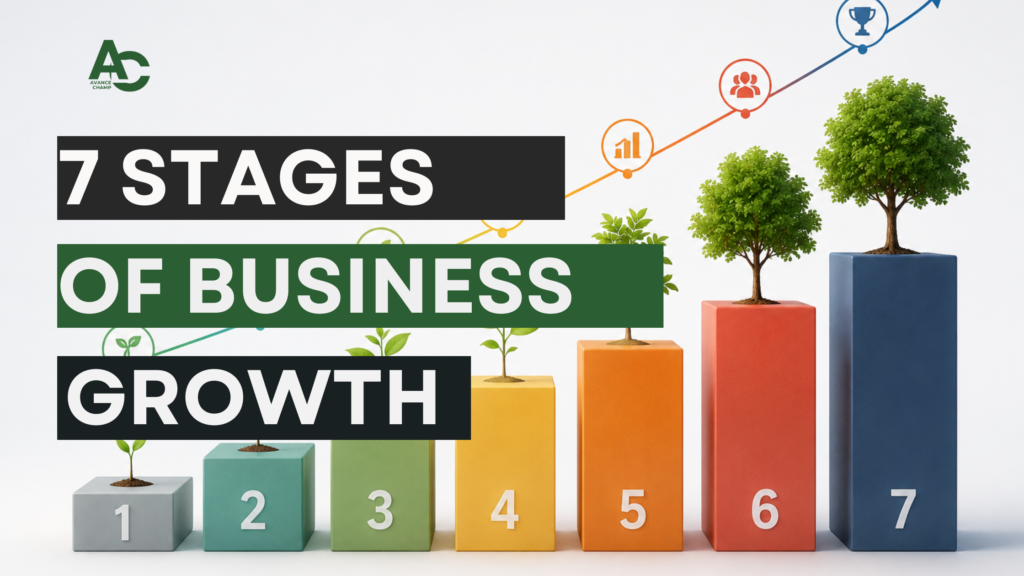
The 7 stages of business growth do not feel like stages when you are inside them.
They feel like pressure.
Like confusion.
Like sitting in a restaurant that serves alarcat and waiting for your food(which takes time to prepare) while you watch others being served theirs.
“Why does growth suddenly feel slower?”
“Why does it feel harder to attract customers now?”
“Why does business feel different even though we are working harder?”
At first, many business owners think something is wrong.
But most times, nothing is wrong.
Your business is simply entering a new stage.
And every new stage demands a different version of you.
That is the part many people discover too late.
One strategy helps you survive the beginning.
Another helps you scale.
Another helps you stay relevant after success finally comes.
Because growth changes everything.
The customers change.
The pressure changes.
The competition changes.
Even your mindset changes.
One day, you’re praying for your first customer.
Then suddenly you’re trying to manage staff, maintain quality, increase visibility, and keep growth from slowing down.
Business becomes different at every level.
That is why understanding the 7 stages of business growth matters so much.
Because when you understand where your business is, you stop panicking unnecessarily.
You stop comparing your stage 2 to somebody else’s stage 6.
You stop making decisions based on pressure alone.
And you begin preparing for what comes next instead of reacting too late.
Stage 1: Existence — The Quiet Stage Nobody Talks About
Every business starts here.
This is the stage where hope feels bigger than results.
You launch your business.
You tell people about it.
You post online.
You wait for calls.
That silence can be painful.
Especially when you know your product or service is valuable.
But here’s something many people misunderstand:
Good products do not automatically attract customers.
Visibility matters.
At this stage, businesses often struggle with:
- No visibility
- Few customers
- Low sales
- Unclear audience targeting
And this is where many businesses accidentally waste time.
Because they try speaking to everybody.
Everybody.
Meanwhile the businesses growing faster usually understand one important thing:
Specific businesses attract stronger buyers.
How to overcome it:
- Understand your ideal customers deeply
- Create a clear offer people immediately understand
- Hire the right marketing team early
- Start building awareness consistently
Marketing focus:
People cannot buy from businesses they do not notice. At this stage, you need visibility.
Stage 2: Survival — When Revenue Starts Playing Games With Your Emotions
This stage feels exciting and stressful at the same time.
Customers are beginning to come in.
Sales are happening.
But consistency still feels unstable.
One month feels amazing.
The next month feels uncomfortable.
You begin refreshing your dashboard more often.
Checking messages repeatedly.
Watching numbers closely.
Because now the business is alive.
But it still feels fragile.
This stage usually comes with:
- Inconsistent revenue
- Unpredictable customer flow
- Difficulty covering operational costs
And this is where businesses realise something important.
Referrals alone are not enough for long-term growth.
How to overcome it:
- Continue working with the right marketing team
- Invest in marketing consistently
- Create reliable lead generation channels
- Track marketing and sales performance
Marketing focus:
Businesses grow faster when customer acquisition becomes intentional instead of random.
Stage 3: Stability — The Dangerous Comfort Zone
This stage looks successful from the outside.
The business becomes more stable.
Customers recognise your name.
Revenue improves.
Things finally feel calmer.
But hidden inside this stage is a dangerous trap.
Comfort.
Because growth quietly starts slowing down.
Not because the business is failing.
Because what helped you survive may no longer be enough to help you expand.
This stage often brings:
- Plateauing sales
- Reduced customer excitement
- Slower business growth
How to overcome it:
- Strengthen brand positioning
- Improve customer experience
- Build authority and trust
- Focus on customer retention
Marketing focus:
Growth is not only about attracting attention.
Keeping trust matters too.
Stage 4: Growth — When Bigger Dreams Start Creating Bigger Problems
This is where ambition grows louder.
You begin thinking differently.
More customers.
More locations.
Larger market share.
Bigger visibility.
The business starts feeling real.
But so does competition.
At this stage, many businesses discover something uncomfortable:
The strategies that brought early growth may not support expansion.
And suddenly scaling feels harder than expected.
Common challenges include:
- Increased competition
- Limited market reach
- Difficulty scaling operations
How to overcome it:
- Expand marketing efforts strategically
- Launch stronger campaigns
- Reach new audiences
- Increase visibility consistently
Marketing focus:
The marketing strategy that got your first hundred customers may not bring your next thousand.
Stage 5: Scale — When The Business Starts Moving Faster Than You
This stage changes everything.
Growth accelerates.
Demand increases.
More responsibilities appear.
And suddenly the business starts depending heavily on you.
Every decision.
Every approval.
Every emergency.
Everything waits for the owner.
That pressure becomes exhausting.
This stage often includes:
- Operational pressure
- Team management challenges
- Difficulty handling demand
How to overcome it:
- Build systems and processes
- Delegate responsibilities
- Automate repetitive tasks
- Set up the business to function well without constant owner involvement
Marketing focus:
Businesses scale better when systems support growth.
Stage 6: Maturity — Staying Relevant After Success
This stage looks impressive.
The business becomes established.
People know your name.
The brand carries weight.
But success creates a new challenge:
Remaining relevant.
Markets evolve constantly.
Customer behaviour changes.
Competitors improve.
Businesses that stop adapting slowly become forgettable.
How to overcome it:
- Continue investing in marketing
- Refresh campaigns and messaging
- Launch new offers
- Stay connected with customer needs
Marketing focus:
Visibility still matters even after success arrives.
Stage 7: Renewal Or Decline — The Stage That Decides The Future
This stage determines whether businesses evolve or slowly disappear.
That sounds dramatic.
But it happens every day.
Businesses that refuse to adapt often lose relevance quietly.
Not immediately.
Gradually.
Customers shift.
Trends change.
Attention moves elsewhere.
How to overcome it:
- Study market trends
- Adapt quickly
- Reposition when necessary
- Strengthen the marketing strategy continuously
Marketing focus:
Businesses that disappear from attention eventually disappear from conversations too.
The Real Meaning Behind The 7 Stages of Business Growth
The 7 stages of business growth are not signs that something is wrong.
They are signs your business is evolving.
The journey looks like this:
Existence → Survival → Stability → Growth → Scale → Maturity → Renewal
And every stage asks businesses different questions.
Different decisions.
Different strategies.
If you want to truly grow your business, understanding your current stage changes everything.
Because growth becomes easier when you stop reacting emotionally and start preparing strategically.
Business growth rarely happens in one dramatic moment.
Usually it happens quietly.
One decision.
One adjustment.
One strategy.
Then one day you realise the business no longer feels stuck.
It feels alive.
It feels clearer.
It feels ready for the next stage.
Book a consultation.
You are one conversation away from discovering what your next stage of growth truly requires.